Industry
Computer Networking
Industry
AI / Conversational Interfaces
Company
DraftKings + OpenAI
Bringing Real-Time Sports Into ChatGPT
Bringing Real-Time Sports Into ChatGPT


ChatGPT is becoming the new starting point for information.
As users shift to conversational interfaces for real-time information, the answers they get are often inconsistent, unattributed, and sometimes wrong.
This created a new kind of product gap:
Timeline
Q4 2025 - Q1 2026
Role
Senior Product
Designer
Product
iOS, Android, Web
Sports fans had moved to conversational interfaces - but sports data had not
Opportunity
OpenAI launched a new Apps SDK, allowing companies like Booking.com and Figma to build native experiences inside ChatGPT.
For DraftKings, this was a chance to do something big.
Define what sports looks like in conversational AI.

Sports fans had moved to conversational interfaces - but sports data had not
Opportunity
OpenAI launched a new Apps SDK, allowing companies like Booking.com and Figma to build native experiences inside ChatGPT.
For DraftKings, this was a chance to do something big.
Define what sports looks like in conversational AI.


The Core Problem
Designing for ChatGPT is fundamentally different.
There’s no homepage, no navigation, no guaranteed entry point - and no control over when or how users arrive.
Every interaction starts with a question.
Which means the product is the response.
Designing For Conversation
Structuring Responses
User input is inherently messy:
“Show me the Giants game”
“NBA tonight”
“Did Alabama win?”
Instead of trying to standardize the input, we designed a system that translates natural language into structured, visual outputs - scoreboards, game breakdowns, schedules, and matchup summaries.


Rather than returning plain text, the app responds with modular components that make complex data easy to scan and understand.
The goal wasn’t just to answer questions, it was to make answers feel like products.
Designing for Ambiguity
Unlike traditional apps, users don’t follow flows - they ask incomplete questions.
“Show me the Raptors game.”
Instead of failing, we designed systems to handle ambiguity, detecting intent, offering structured clarifications, and guiding users forward.

As you can see with this example above, "Bruins" is spelled incorrectly as "Brewins" and the question is ambiguous.
However, what would have normally been a dead end became a guided interaction.
Supporting conversational continuity
Users don’t think in isolated queries. They ask:
“What’s the score of the Lakers game?”
“How did they do last week?”
We designed for context carryover, enabling:
Follow-up questions
Implicit references (“they”, “that game”)
Progressive exploration

This made the experience feel native to ChatGPT, not bolted on.
Designing Under Constraints
This product was defined as much by constraints as by features.
No betting (by design)
OpenAI policies prohibit gambling functionality.
So we built strict guardrails:
No odds, spreads, or betting language
Safe redirect patterns for betting queries
Neutral, factual tone across all responses
Response to a question regarding betting odds

This required rethinking DraftKings’ voice:
From entertainment + wagering → to trusted data provider
Designing within OpenAI's ecosystem
Beyond product constraints, we also had to adhere to OpenAI’s design and platform guidelines for ChatGPT apps.
This meant aligning with established patterns for response structure, interaction behavior, and overall UX consistency within the ChatGPT environment.
To ensure quality and approval readiness, we partnered closely with OpenAI - working directly with a design representative to review and QA our design components before launch.
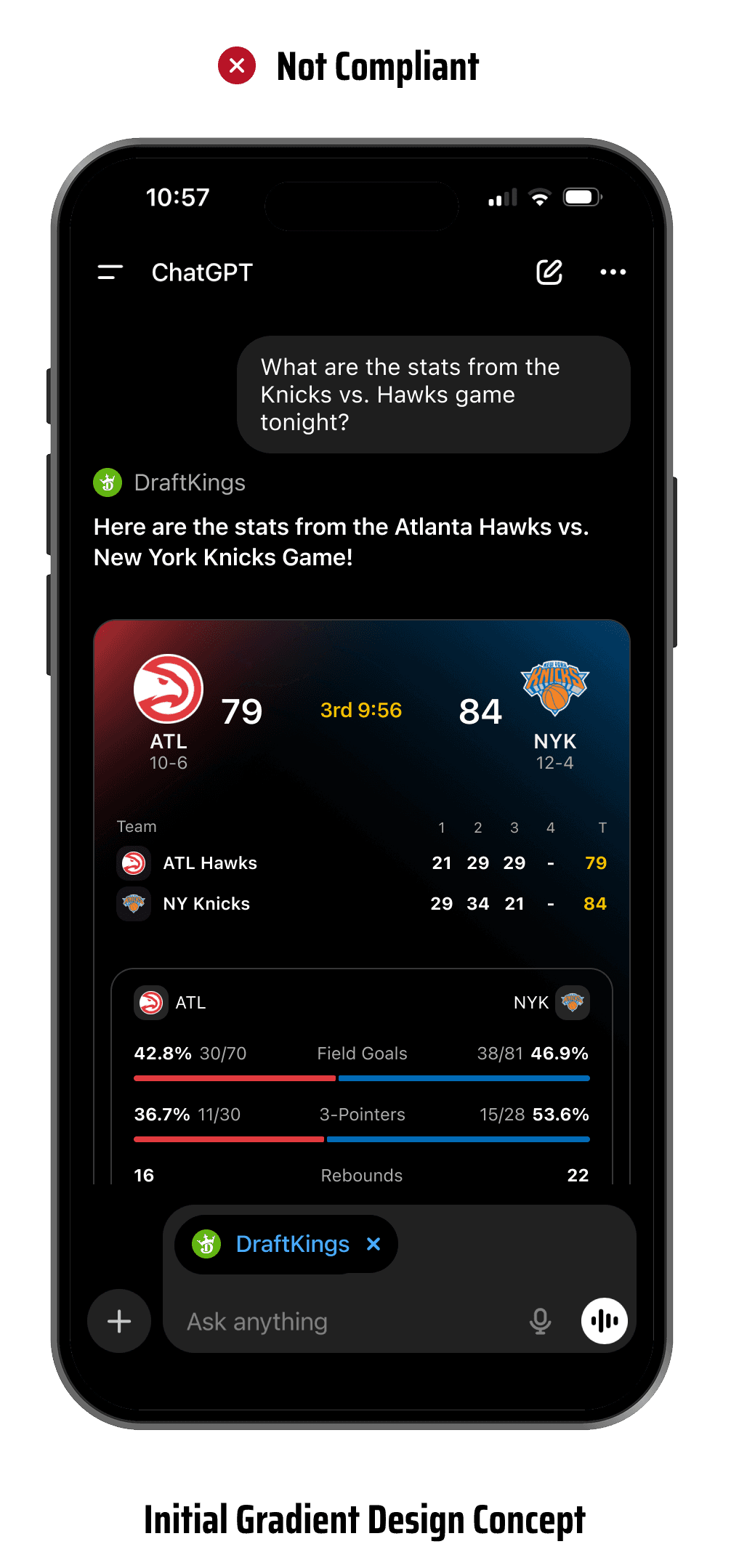

This collaboration helped ensure our app felt native to ChatGPT while meeting platform standards for usability, consistency, and compliance.
Real-time data expectations
Sports is unforgiving, if a score is wrong or delayed, trust is lost instantly.
So we designed for speed and reliability: sub-5 second response times, data freshness within 60 seconds, and clear fallback states when data is unavailable.
These constraints shaped everything from UI states and error handling to how we set and managed user expectations.

System Components
We built a flexible system of components:


Designed as a system, these components adapt across sports, scale across leagues, and support future features without requiring a rebuild.
The Bet
We made an intentional decision:
Don’t treat this as a utility. Treat it as a platform entry point.
Instead of building a simple API wrapper, we designed a DraftKings-native experience inside ChatGPT - one that feels conversational, not transactional, delivers real-time, trusted data, and positions DraftKings as the default sports authority in AI.
All of this had to work within strict platform constraints: no betting, no accounts, and no personalization (yet).
The Bet
We made an intentional decision:
Don’t treat this as a utility. Treat it as a platform entry point.
Instead of building a simple API wrapper, we designed a DraftKings-native experience inside ChatGPT - one that feels conversational, not transactional, delivers real-time, trusted data, and positions DraftKings as the default sports authority in AI.
All of this had to work within strict platform constraints: no betting, no accounts, and no personalization (yet).
The Core Problem
Designing for ChatGPT is fundamentally different.
There’s no homepage, no navigation, no guaranteed entry point - and no control over when or how users arrive.
Every interaction starts with a question.
Which means the product is the response.
Designing for Conversation
Structuring Responses
User input is inherently messy:
“Show me the Giants game”
“NBA tonight”
“Did Alabama win?”
Instead of trying to standardize the input, we designed a system that translates natural language into structured, visual outputs - scoreboards, game breakdowns, schedules, and matchup summaries.

Rather than returning plain text, the app responds with modular components that make complex data easy to scan and understand.
The goal wasn’t just to answer questions, it was to make answers feel like products.
Designing for Ambiguity
Unlike traditional apps, users don’t follow flows, they ask incomplete questions.
“Show me the Raptors game.”
Instead of failing, we designed systems to handle ambiguity, detecting intent, offering structured clarifications, and guiding users forward.
As you can see with this example above, "Bruins" is spelled incorrectly as "Brewins" and the question is ambiguous.
However, what would have normally been a dead end became a guided interaction.
Supporting conversational continuity
Users don’t think in isolated queries. They ask:
“What’s the score of the Lakers game?”
“How did they do last week?”
We designed for context carryover, enabling:
Follow-up questions
Implicit references (“they”, “that game”)
Progressive exploration
This made the experience feel native to ChatGPT, not bolted on.
Designing Under Constraints
This product was defined as much by constraints as by features.
No betting
(by design)
OpenAI policies prohibit gambling functionality.
So we built strict guardrails:
No odds, spreads, or betting language
Safe redirect patterns for betting queries
Neutral, factual tone across all responses
Response to a question regarding betting odds
This required rethinking DraftKings’ voice:
From entertainment + wagering → to trusted data provider
Designing within OpenAI's ecosystem
Beyond product constraints, we also had to adhere to OpenAI’s design and platform guidelines for ChatGPT apps.
This meant aligning with established patterns for response structure, interaction behavior, and overall UX consistency within the ChatGPT environment.
To ensure quality and approval readiness, we partnered closely with OpenAI - working directly with a design representative to review and QA our design components before launch.
This collaboration helped ensure our app felt native to ChatGPT while meeting platform standards for usability, consistency, and compliance.
Real-time data expectations
Sports is unforgiving, if a score is wrong or delayed, trust is lost instantly.
So we designed for speed and reliability: sub-5 second response times, data freshness within 60 seconds, and clear fallback states when data is unavailable.
These constraints shaped everything from UI states and error handling to how we set and managed user expectations.
Impact
This work set clear success metrics:
• 100K users within 90 days
• 2+ queries per session
• Sub-5 second latency with 95%+ data freshness
• 4 ★ + user rating
All while establishing DraftKings as a first mover in AI-driven sports experiences.
More importantly, it marked a strategic shift: building brand presence in a new interface paradigm and laying the foundation for future monetization as the platform evolves.

Search function through DraftKings App
This wasn’t just a feature, it changed where DraftKings shows up, moving from apps and websites into conversations.

Expanding the Event Card to view more details
System Components
We built a flexible system of components:

Event Cards - quick game summaries

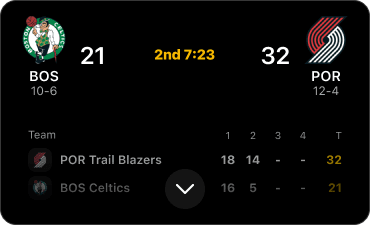

Scoreboards - live game stats


Team Stats - league context
Upcoming Schedule - includes team stats
Designed as a system, these components adapt across sports, scale across leagues, and support future features without requiring a rebuild.
Referrals were almost a universally known concept
Referral programs are not a new concept. People have a general understanding of what referrals are for, regardless of what the product is.
Most people have participated in some sort of referral program
Every participant has either referred or been referred to some online service or product. Roughly half of the participants specifically participated in referrals for online sportsbooks/casinos
Determining factors for participation
Designing For Scale
We intentionally designed beyond v1:
V1 - Informational
• Scores, stats, schedules
• Read-only, non-personalized
V2 - Deeper Context
• Player stats
• Trends and comparisons
• Richer game insights
V3 - Policy Dependent
• Odds and betting context
• Personalized insights
• Proactive experiences (alerts, summaries)
The system was built to evolve as platform constraints loosen.
Impact
This work set clear success metrics:
• 100K users within 90 days
• 2+ queries per session
• Sub-5 second latency with 95%+ data freshness
• 4 ★ + user rating
All while establishing DraftKings as a first mover in AI-driven sports experiences.
Search function through DraftKings App
More importantly, it marked a strategic shift: building brand presence in a new interface paradigm and laying the foundation for future monetization as the platform evolves.
Expanding the Event Card to view more details
This wasn’t just a feature, it changed where DraftKings shows up, moving from apps and websites into conversations.
What I learned
This project reinforced that in AI products, the interface is the response and every answer is the experience. Ambiguity isn’t an edge case, it’s the default, so the system has to guide users instead of failing them.
I also saw how much constraints (whether platform or policy) actually shape the product more than features do. And on new platforms like this, being first isn’t just about shipping early, it’s about setting the bar for what the experience should feel like.


What I learned
This project reinforced that in AI products, the interface is the response and every answer is the experience. Ambiguity isn’t an edge case, it’s the default, so the system has to guide users instead of failing them.
I also saw how much constraints (whether platform or policy) actually shape the product more than features do. And on new platforms like this, being first isn’t just about shipping early, it’s about setting the bar for what the experience should feel like.
As we are currently launching this feature for the end of Q3 2024, we will collect feedback and data from CX and see what we can improve for V2. A special thanks to Ara An (UXM), Tristan Ho (UXR), Gabe Psellas (Lead PM), and everyone on the promotions feature team.
I led the design of the Refer a Friend promotion - a new referral feature offered by theScore Bet and ESPN BET. The promotion aims to leverage the app’s existing users by offering rewards to referring friends and family.
ChatGPT is becoming the new starting point for information.
As users shift to conversational interfaces for real-time information, the answers they get are often inconsistent, unattributed, and sometimes wrong.
This created a new kind of product gap:
Product
iOS, Android, Web
Role
Senior Product Designer
Timeline